(Services) (07)
Sustainabledesign
In the tropics, most of what makes a building sustainable is decided before any equipment: where it sits, which way it faces, how deep its roof is. We design to those decisions from the first visit, and certify them with RESET or LEED® if you want the label.
(At a glance)
(Who it is for)
- Hotels and retreats that want a label their guests recognise
- Owners who will sell or rent and want proof of how the building performs
- Anyone who wants the shade, breeze and water decisions written down and checked
(Strategies)
-
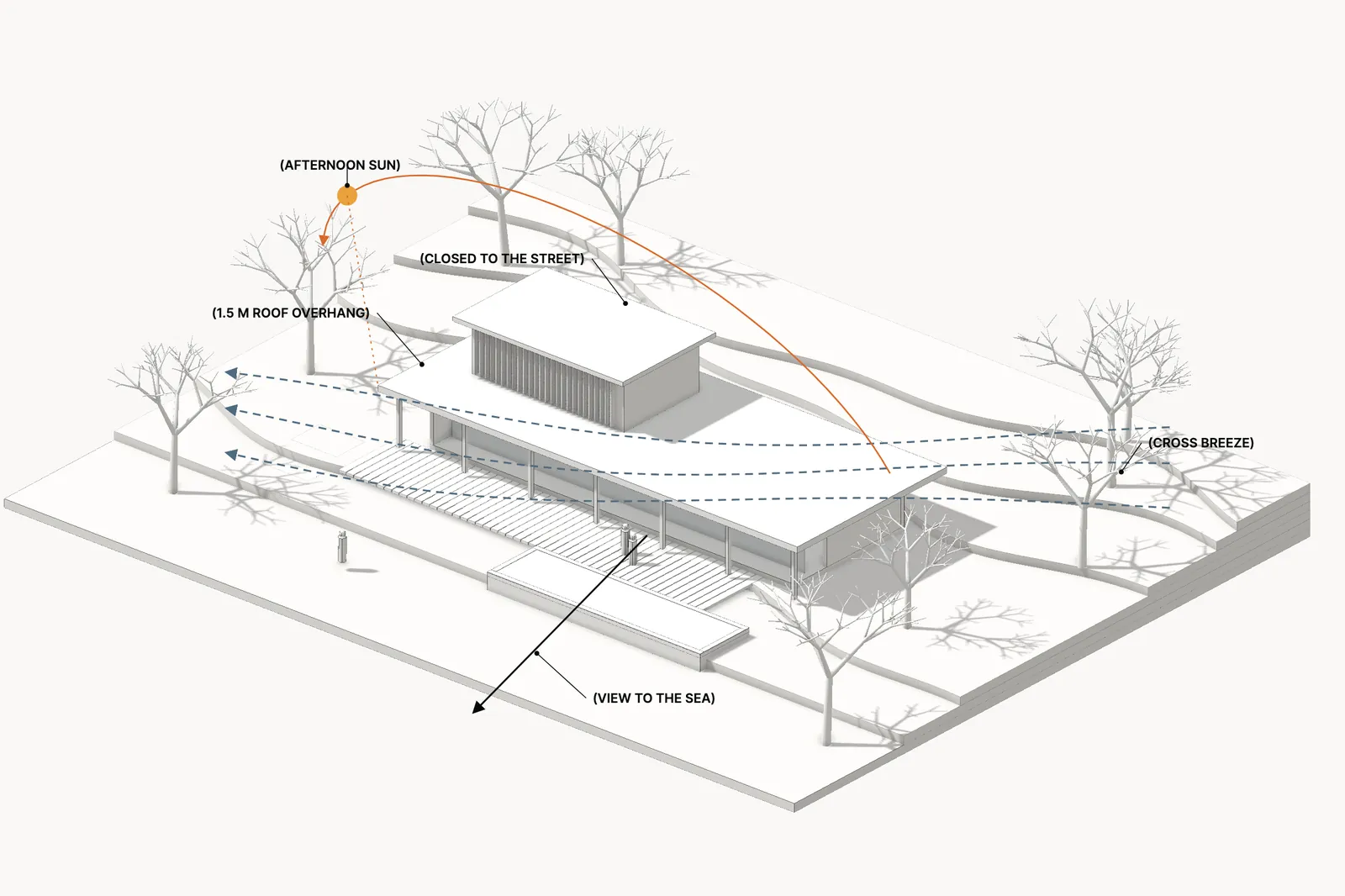
Massing and breeze study (01) Climate
Sun, shade and breeze
The cheapest energy is the energy a building never needs. We draw the sun path and the prevailing wind for every site, then place the rooms, size the overhangs and open the walls so that shade and cross ventilation do most of the cooling.
- Sun path and shade study
- Overhangs sized to the sun
- Cross ventilation through every room
- Insulated roofs
- Daylight without glare
- Air conditioning only where it is needed
-
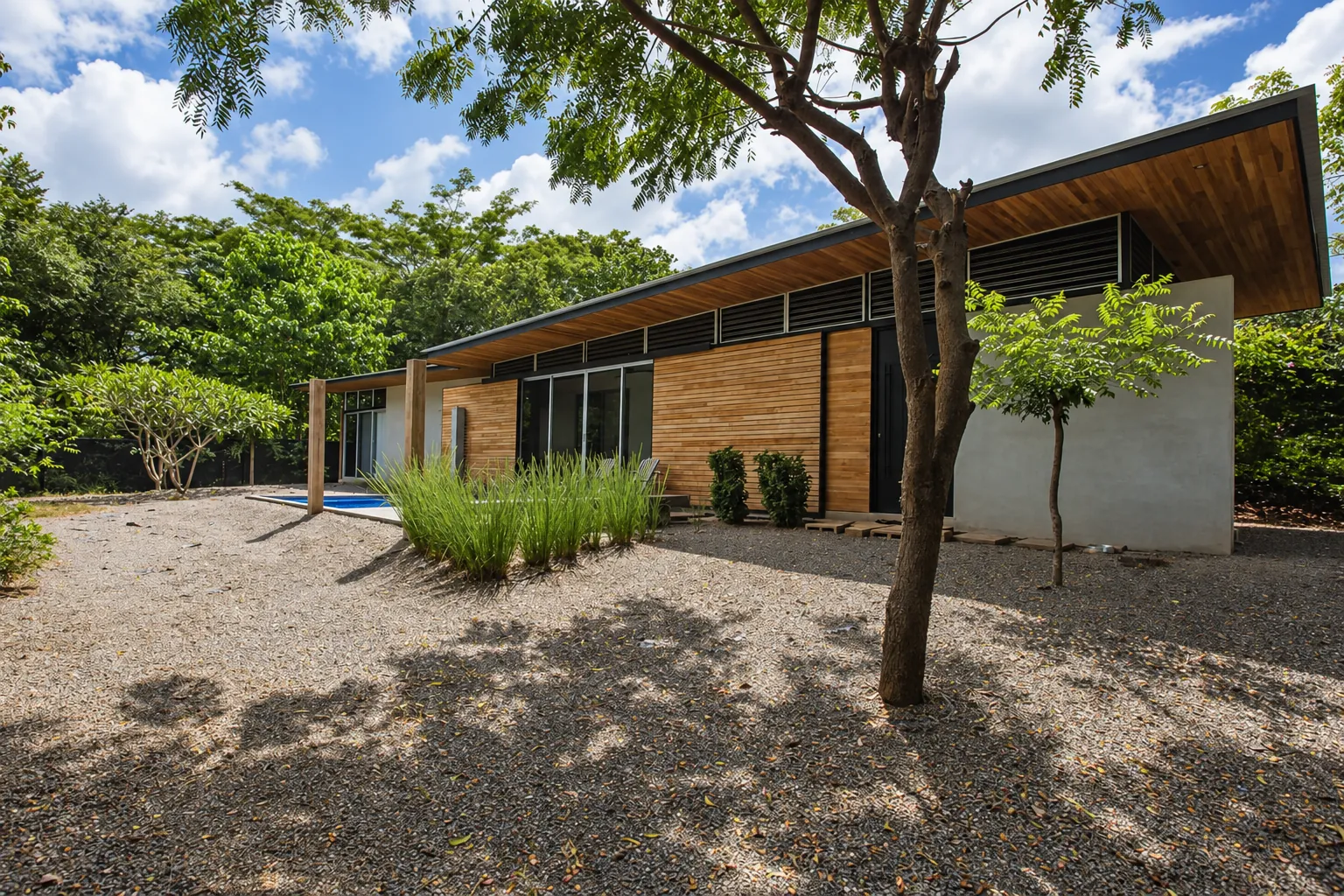
Casa Alcaraván (02) Water
Rain kept for the dry season
Rain comes in a few months and in large amounts, and in Guanacaste the dry season lasts about five. We size cisterns to the roof and to those months, send grey water to the garden where the rules allow it, and plant so the garden gets through the dry season on little irrigation.
- Rainwater harvesting sized to the roof
- Cisterns for irrigation and toilets
- Grey water reuse where allowed
- Low-flow fixtures
- Drip irrigation
- Rain that soaks into the lot instead of running off
-
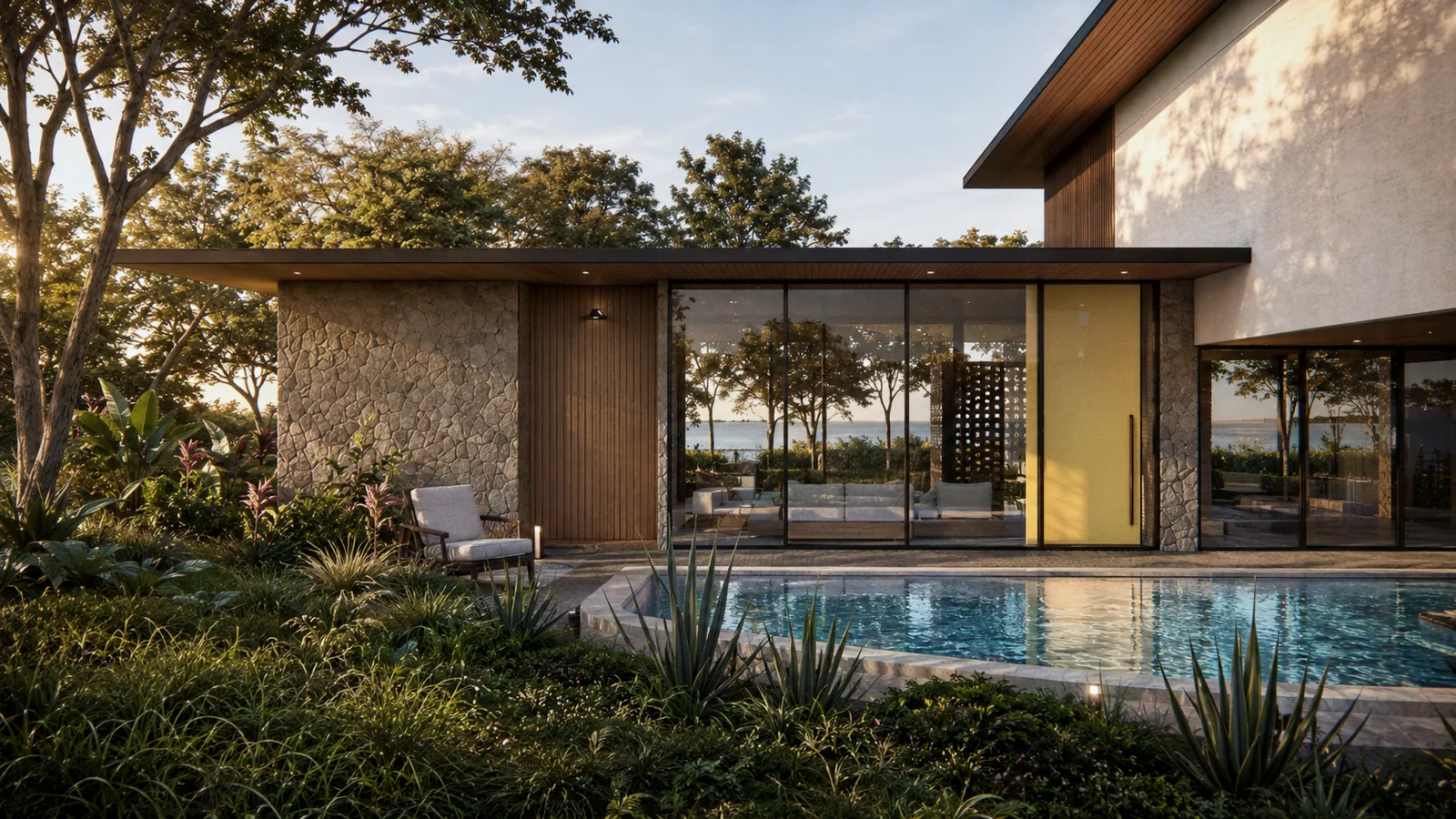
Kauhane House (03) Materials
Built for salt air
On the coast, a material that fails in ten years is the least sustainable choice. We choose for salt air, humidity and sun: plantation teak, board-formed concrete, local stone and finishes that age instead of peeling, bought close to the site where we can.
- Plantation and certified timber
- Board-formed concrete
- Local stone
- Paints and sealers low in solvents
- Hardware that resists salt air
- Suppliers close to the site
-
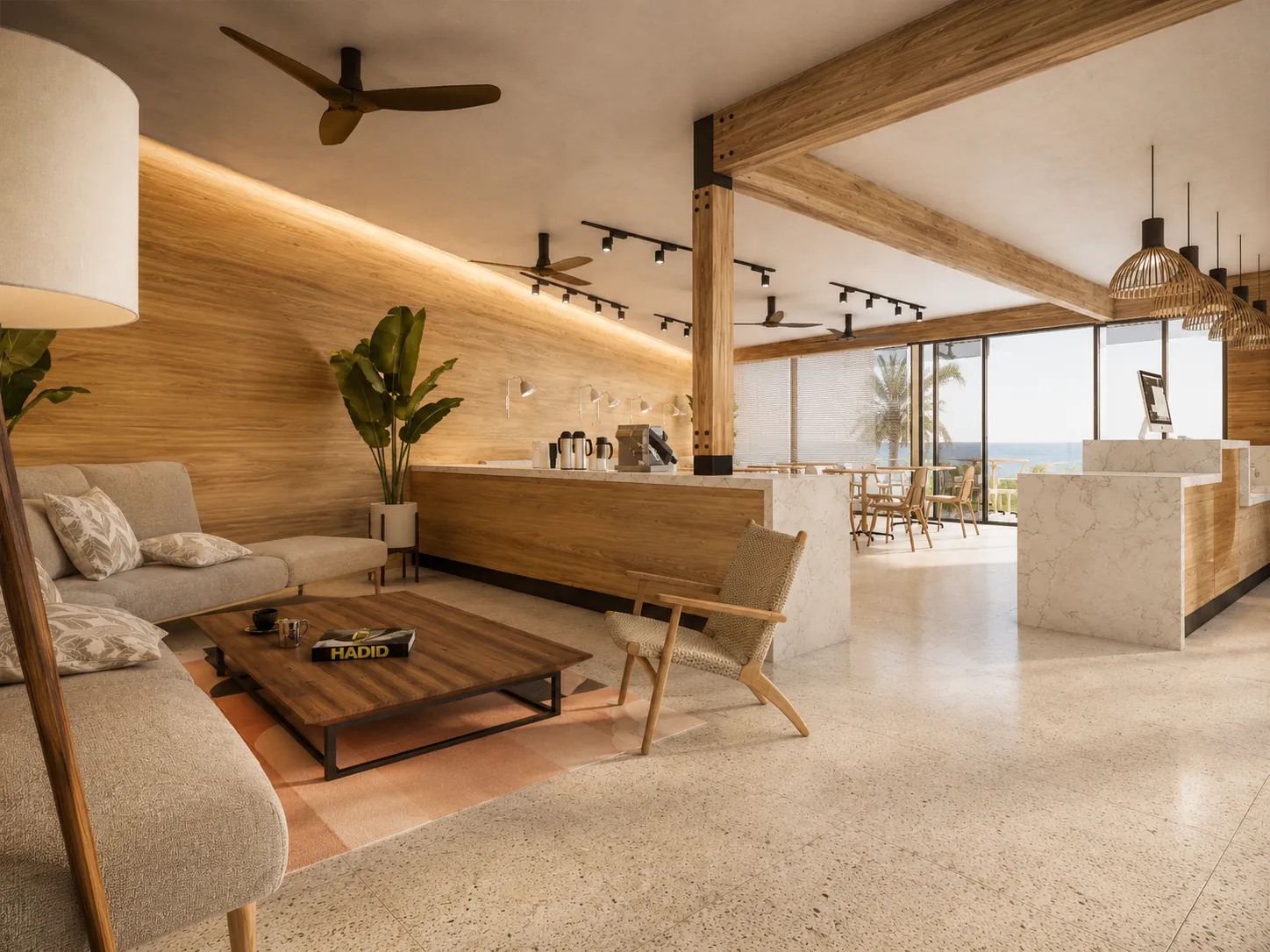
Dawn Patrol Bakery (04) Energy
Little left to run
What is left to run should run on little: ceiling fans before air conditioning, LED lighting with controls, hot water from the sun, and roofs oriented and built to carry solar panels, now or later.
- Ceiling fans
- Split air conditioning in bedrooms only
- LED lighting with sensors and timers
- Solar water heating
- Roofs ready for solar panels
- Efficient appliances
-
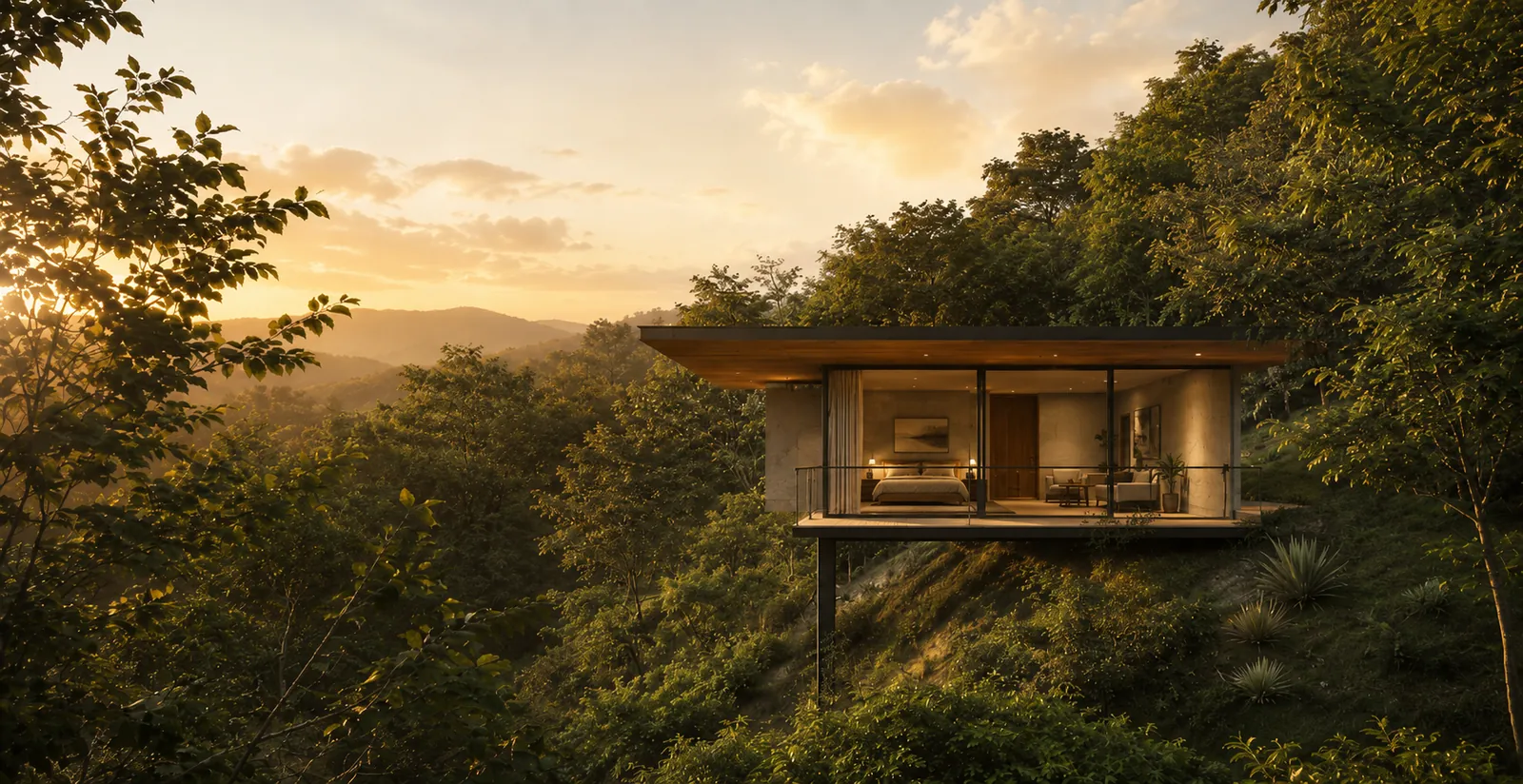
Tree House (05) Landscape
Keep what grows there
We survey the trees before drawing and design around the ones worth keeping. New planting uses native species in layers (canopy, shrubs and ground cover), which need less water and feed the birds and insects of the place. Near nesting beaches, like Playa Grande, outdoor lights stay low and shielded from the sand.
- Tree survey before the design
- Native species
- Layered planting
- Lighting that stays off the beach and the sky
- Native ground cover instead of lawn
- Compost for garden waste
-
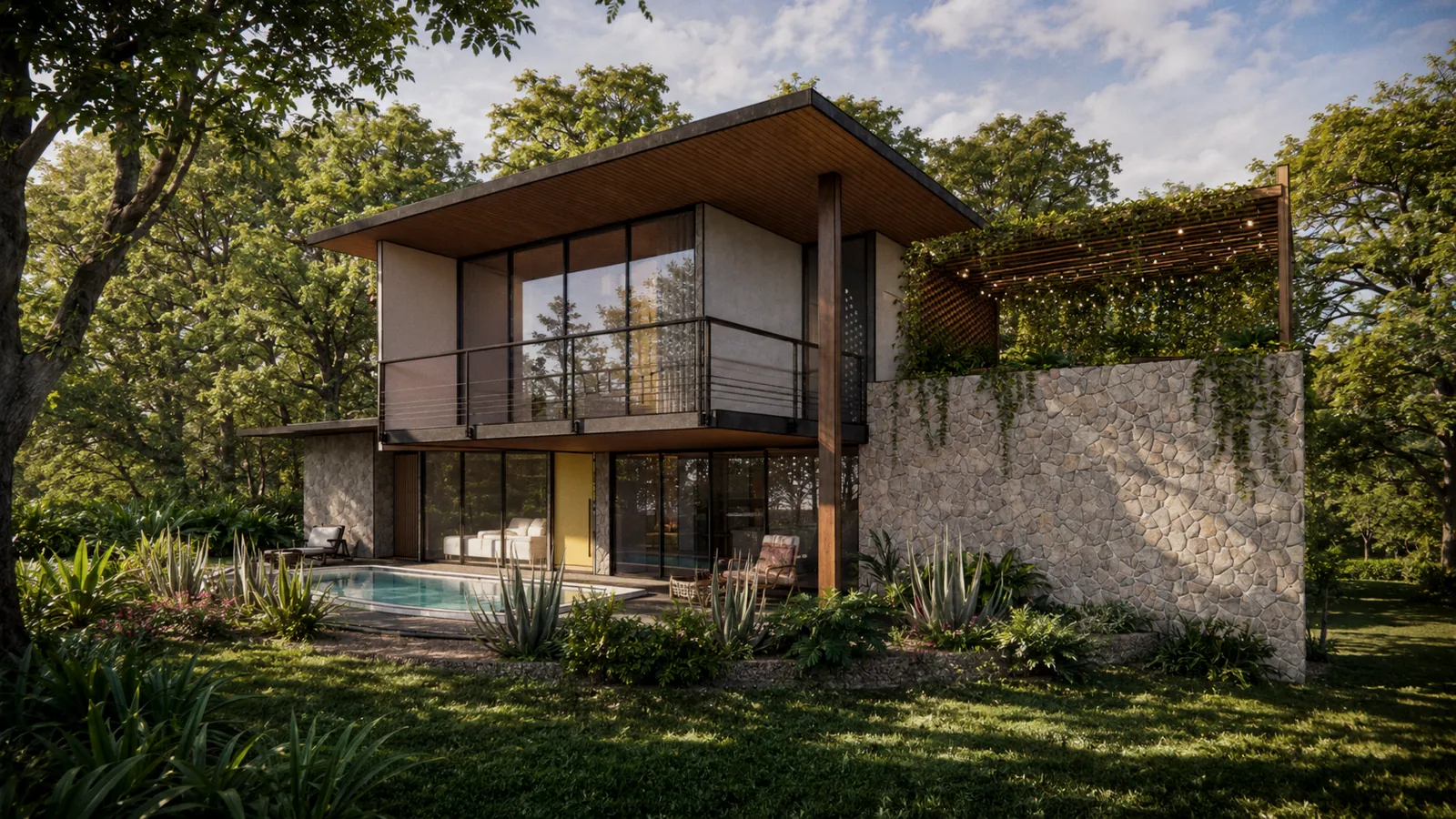
Kauhane House (06) Planted roofs
The roof as a garden
A planted roof keeps the room below cooler, holds back the rain during a storm and gives the floors above something green to look at. Kauhane House has a planted terrace on its upper floor.
- Planted roofs and terraces
- Drought-tolerant native plants
- Drainage sized for tropical storms
- Waterproofing with a root barrier
(Certification)
-
(Costa Rica)
RESET
Requirements for Sustainable Buildings in the Tropics, written in Costa Rica and published as the national standard INTE C170. INTECO evaluates it in three stages, design, construction and operation 1, and rates the result in suns 3.
- Evaluated by
- INTECO
- Levels
- One sun to Sol RESET + 2
- Best for
- Houses and small hotels
-
(International)
LEED®
The rating system of the U.S. Green Building Council, now in version 5 2. Better known to foreign buyers, guests and brands, and costlier to certify; a LEED house also needs an independent Green Rater on site 6.
- Certified by
- GBCI
- Levels
- Certified, Silver, Gold, Platinum
- Best for
- Hotels and projects for an international market
-
(Without a certificate)
Designed to the criteria
Every project we design follows the decisions above, certificate or not. If the label is not worth its cost to you, you still get the shade, the breeze and the water strategy, written down in the drawings.
- Certifier's fees
- None
- Best for
- Owners who want the result, not the label
(How it runs)
-
(01)
Choose the standard
With the lot study or the conceptWe compare RESET and LEED for your project's type, budget and goals, set the level to aim for, and register the project with the certifier.
You receive
- Which standard and which level
- What certification will cost, certifier included
- The list of criteria the design has to meet
-
(02)
Design to the criteria
With the designOrientation, shade, cross ventilation, water and materials are decided against the criteria and recorded as we draw. RESET reviews design, construction and operation as separate stages 1; an energy model is added where the standard asks for one.
You receive
- The criteria tracked in the drawings
- The design documentation for review
-
(03)
Build and verify
During constructionWe keep the evidence the standard asks for on site: materials, waste, water and energy systems. LEED houses need on-site verification by an independent Green Rater from the design stage on 6.
You receive
- Evidence for each criterion
- Site verification where it applies
-
(04)
Certification
After the buildWe submit the project to INTECO or GBCI and answer the reviewers until the certificate is issued.
You receive
- The certificate and its level
(Fees)
Certification adds two costs to the design: our work on it, agreed up front as a separate fee, and the certifier's fees, which the owner pays. For LEED these are a registration fee and a certification fee set by GBCI by floor area 4; for RESET, the evaluation by INTECO 1. An energy model or commissioning, where the standard requires them, are paid to those specialists.
The decisions the standards reward, deep shade, rooms that cross-ventilate, water that is collected and reused, are ones we already make for the climate. Most of the extra cost is the evidence and the review, not the building.
LEED® is a registered trademark of the U.S. Green Building Council, named here to describe the certification.
(Not included)
- A promise of certification: the certifier decides after reviewing the evidence
- The independent verification of a LEED house, done by a Green Rater 6
- Energy modelling and commissioning, which we coordinate with specialists
(Questions)
RESET or LEED, which one in Costa Rica?
RESET was written in Costa Rica for tropical buildings, is published as the national standard INTE C170 and is evaluated by INTECO 1. LEED is international and better known to foreign buyers, guests and investors, and it costs more to certify. For a house or a small hotel RESET usually fits; for a hotel aimed at international guests or a brand, LEED may be worth it.
Can a house be LEED certified?
Yes, under the LEED residential rating systems. The difference is a third party: an independent Green Rater has to verify the house on site, from the design stage to the end of the build 6.
Who grants the certificate?
When should we decide?
Before the concept. The standards reward decisions about where the building sits and which way it faces, and those are the first ones we make. Adding certification once the plans are approved is possible, but usually costs more and reaches a lower level.
(Sources)
- #25 RESET, the standard for sustainable architecture in the tropics. Construction21, 2020.
- What you need to know about LEED v5. UL Solutions, 2025.
- RESET: Edificaciones sostenibles en el trópico. Vince Studio, consulted October 2026.
- LEED certification fees. USGBC, consulted October 2026.
- Consultoría de la Norma RESET (list of RESET consultants by level). CFIA, consulted October 2026.
- LEED Green Rater. USGBC, consulted October 2026.